




Essential Oil vs Perfume: What’s the Difference and Which One Is Right for You?
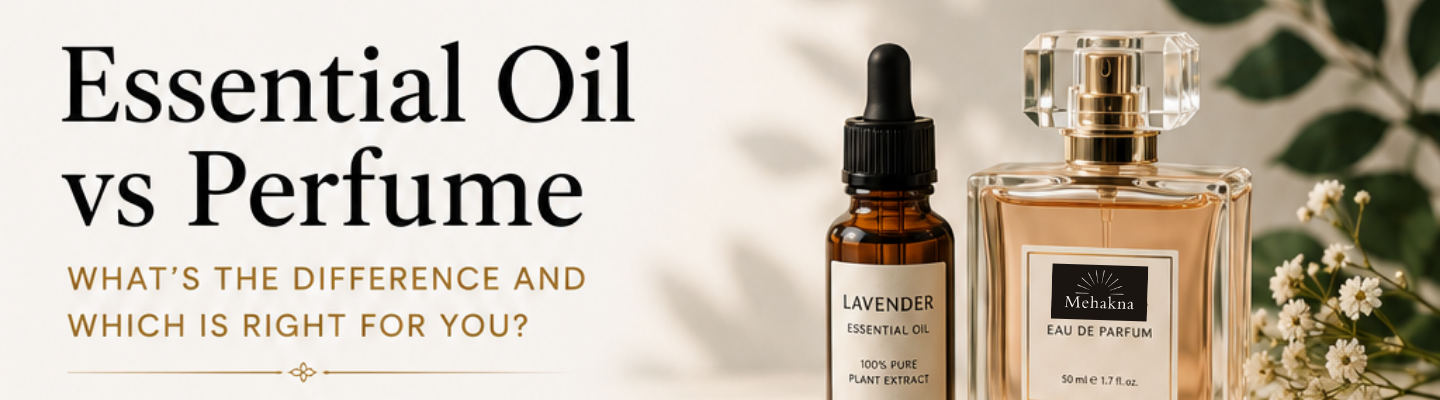
When it comes to fragrance, you may have wondered about the difference between essential oil vs perfume. Both can smell beautiful, but they are created differently, used differently, and offer very different fragrance experiences. Essential oils are concentrated aromatic extracts obtained from plants, while perfumes are carefully formulated fragrance compositions designed to create a specific scent and performance on the skin.
So, which one should you choose?
The answer depends on what you want from your fragrance.
What Are Essential Oils?
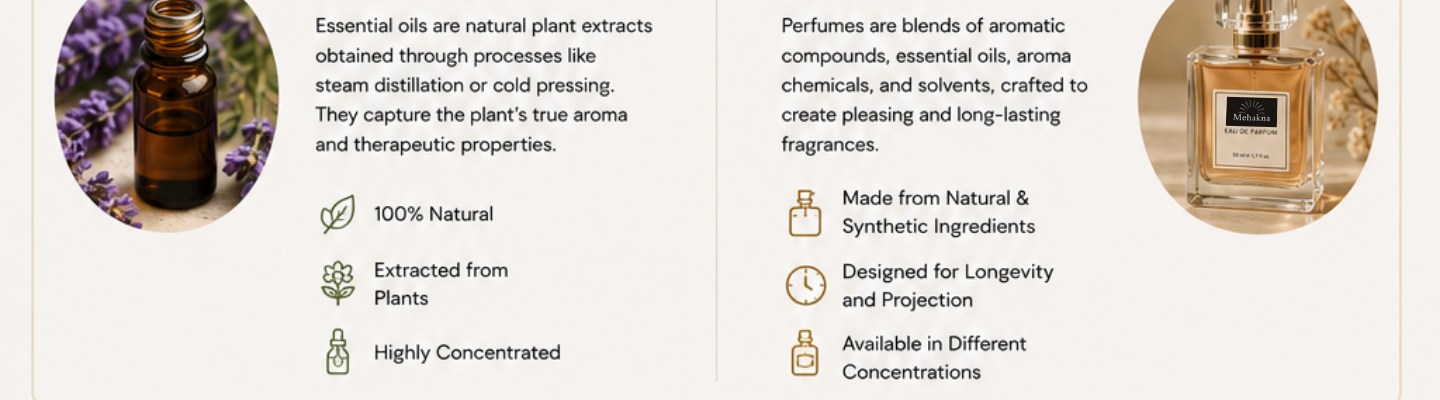
Essential oils are concentrated aromatic extracts derived from different parts of plants, including flowers, leaves, fruits, roots, bark, and wood. They can be produced using methods such as steam distillation or cold pressing, depending on the plant material.
Lavender, peppermint, lemon, rose, sandalwood, and tea tree are some familiar examples of essential oils.
Each essential oil has its own distinctive aroma. Some smell fresh and citrusy, while others can be woody, floral, earthy, spicy, or herbal.
Because they are highly concentrated, essential oils are generally used in small quantities. When applying them to skin, appropriate dilution is important because some oils can cause irritation or sensitivity, particularly for people with sensitive skin or when exposed to sunlight after using certain citrus oils.
Essential oils are also commonly used in aromatherapy, personal care, candles, diffusers, and other applications.
What Is Perfume?
Perfume is a finished fragrance product created by combining aromatic materials with a suitable base. Depending on the formulation, a perfume can contain natural essential oils, other natural extracts, aroma molecules, solvents such as alcohol, and ingredients that help support the fragrance’s stability and performance.
This gives perfumers enormous creative freedom. Instead of relying on one plant extract, a perfumer can combine dozens of different materials to create a completely new fragrance.
For example, a perfume may open with bright citrus notes, develop into a floral heart, and eventually settle into a warm base of woods, musk, amber, or vanilla. This development is one of the most fascinating aspects of wearing perfume.
Essential Oil vs Perfume: The Key Difference
The biggest difference is that an essential oil is generally a concentrated aromatic material, while perfume is a complete fragrance composition.
Think of essential oil as an ingredient and perfume as a finished fragrance experience.
An essential oil might provide the smell of lavender, rose, orange, or sandalwood. A perfume can use those materials alongside many other ingredients to create layers, transitions, projection, and a specific fragrance personality.
Perfume also comes in different concentrations, such as Eau de Cologne, Eau de Toilette, Eau de Parfum, and Parfum. Higher fragrance concentration does not automatically mean better, but it can influence intensity and how long the fragrance remains noticeable.
Which One Lasts Longer?
Longevity depends on many factors, so there is no universal rule that perfume will always last longer than an essential oil.
The composition, concentration, volatility of the materials, skin chemistry, temperature, humidity, and application method can all influence how long a scent remains noticeable.
Some essential oils are highly volatile and may disappear relatively quickly, while heavier oils such as certain woods can remain noticeable for much longer.
Perfumes are specifically formulated as finished fragrances, allowing perfumers to balance lighter and heavier materials to create a desired progression and performance.
This is one reason a well-formulated perfume can provide a more complex scent journey throughout the day.
Which Offers More Fragrance Variety?
This is where perfume has a major advantage.
Essential oils are naturally connected to the plants from which they are extracted. Their character is therefore largely determined by the aromatic profile of that material.
Perfume, however, allows almost unlimited creative combinations.
A perfumer can combine citrus with woods, flowers with musk, spices with amber, or rose with oud. Synthetic aroma molecules can also be used to create scents that may be difficult or impossible to obtain directly from a natural material.
This means perfume can offer an enormous variety of fragrance styles.
Fresh, aquatic, floral, gourmand, woody, spicy, musky, oriental-inspired, and many other fragrance profiles are available.
Are Essential Oils Better Because They Are Natural?
Not necessarily.
“Natural” and “synthetic” describe the source or method of obtaining an ingredient, not whether a fragrance is automatically better, safer, or longer lasting.
Some essential oils can cause skin irritation or allergic reactions, and certain oils require particular precautions when used topically.
At the same time, modern aroma molecules can be carefully evaluated and used to create beautiful, consistent fragrance compositions.
The most important factor is how a fragrance is formulated and how it is used.
When Should You Choose Essential Oils?
Essential oils can be a good choice if you enjoy natural plant aromas, aromatherapy, diffusers, or a more direct connection to individual botanical ingredients.
They are particularly interesting for people who enjoy exploring fragrance materials individually and discovering the unique character of different plants.
However, always follow the recommended usage instructions and use appropriate dilution when applying essential oils to the skin.
When Should You Choose Perfume?
Perfume is ideal when you want a finished fragrance designed specifically for personal wear.
If you enjoy fragrances that evolve throughout the day, leave a noticeable impression, and offer different layers, perfume provides much more flexibility.
A well-created perfume can also become part of your personal identity.
The right fragrance can complement your outfit, match your mood, suit a particular occasion, or simply make you feel more confident.
Essential Oil vs Perfume: Which Is Right for You?
There is no single winner in the essential oil vs perfume debate.
They serve different purposes.
Essential oils allow you to experience the distinctive aromatic character of individual plants, while perfumes bring together multiple ingredients to create a complete and carefully structured scent.
If you are looking for aromatherapy or botanical exploration, essential oils may be worth exploring. If your priority is a beautiful, wearable fragrance with complexity, variety, and a carefully developed scent profile, perfume may be the better choice.
Ultimately, fragrance is personal.
Whether you prefer the simplicity of a botanical essential oil or the artistry of a carefully composed perfume, the best choice is the one that fits your lifestyle, preferences, and the way you want to express yourself.
Final Thoughts
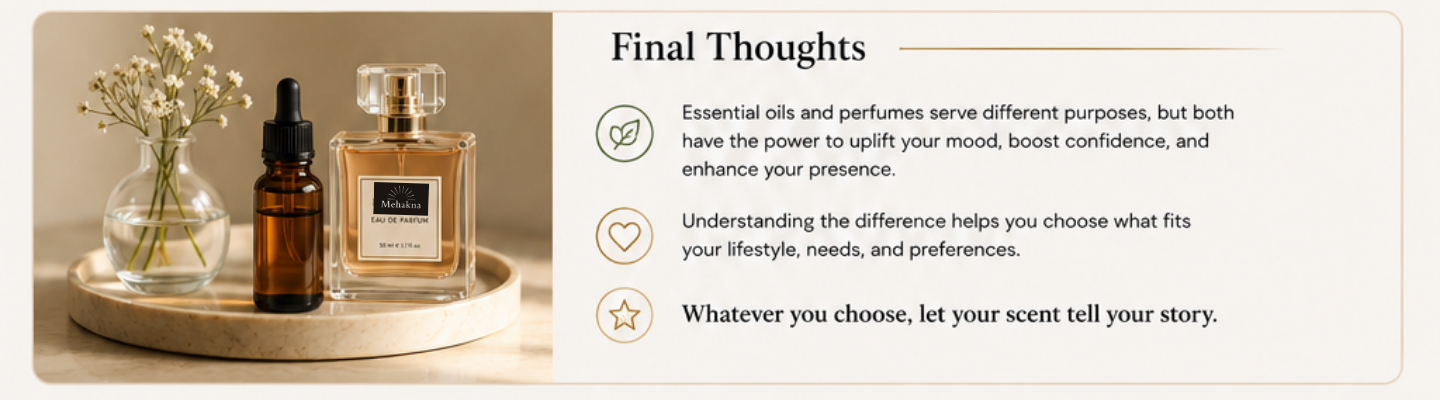
Understanding the difference between essential oils and perfumes makes it easier to choose the right fragrance for your needs.
Essential oils offer concentrated botanical aromas, while perfumes bring together a broader range of natural and synthetic fragrance materials to create sophisticated, wearable compositions.
Neither is automatically better.
The real beauty lies in discovering what you enjoy and finding a scent that feels like your own.